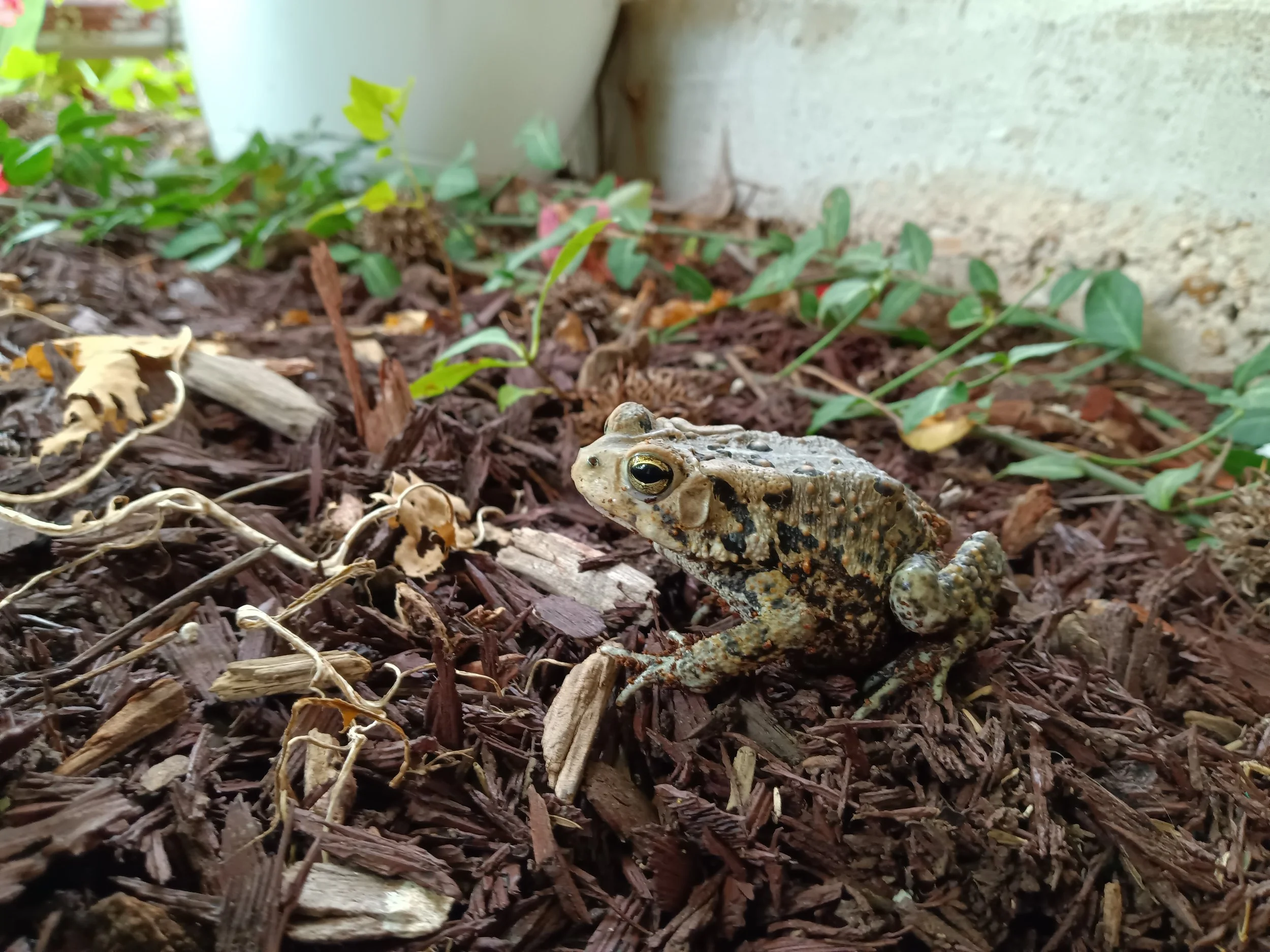
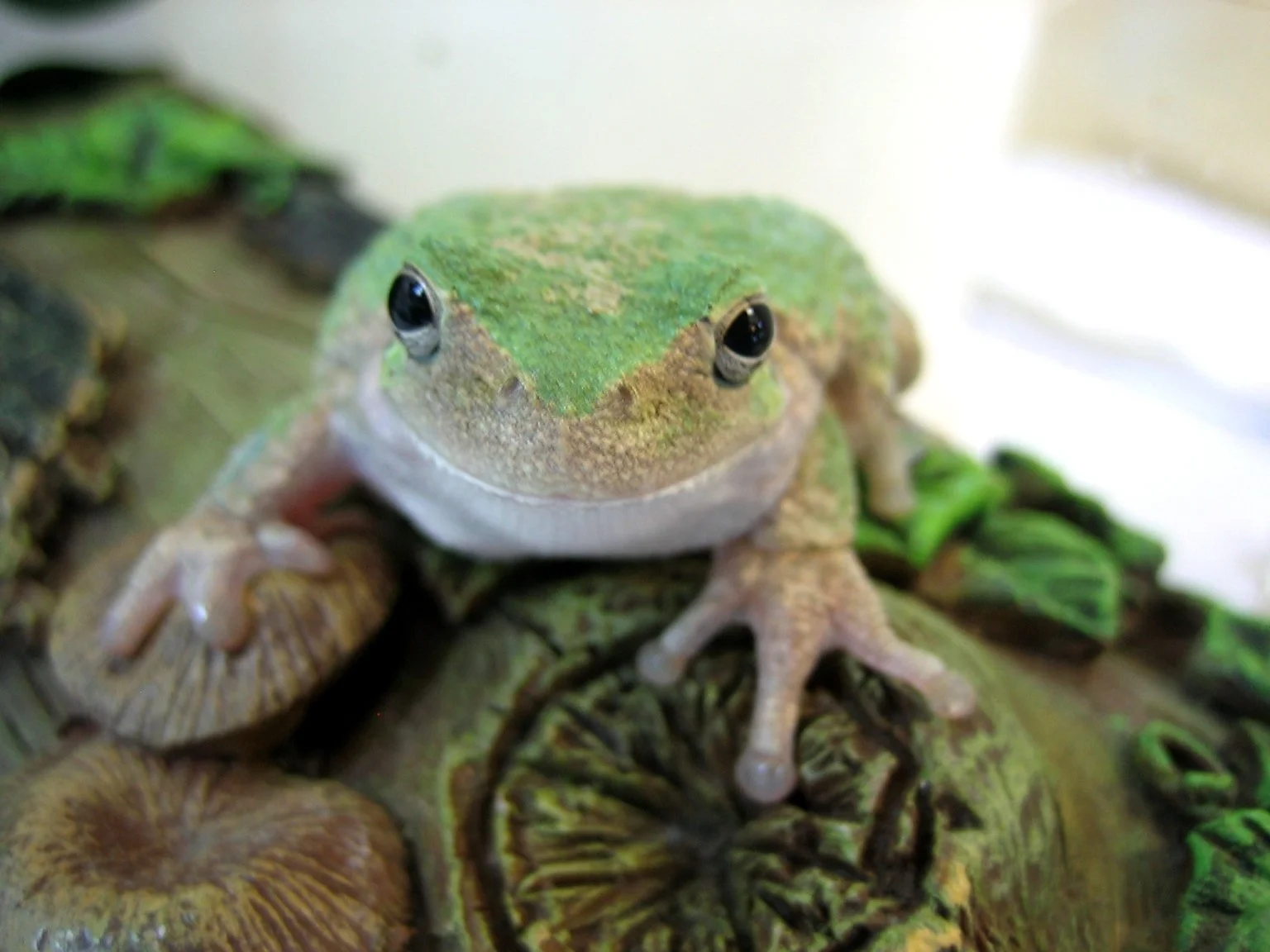
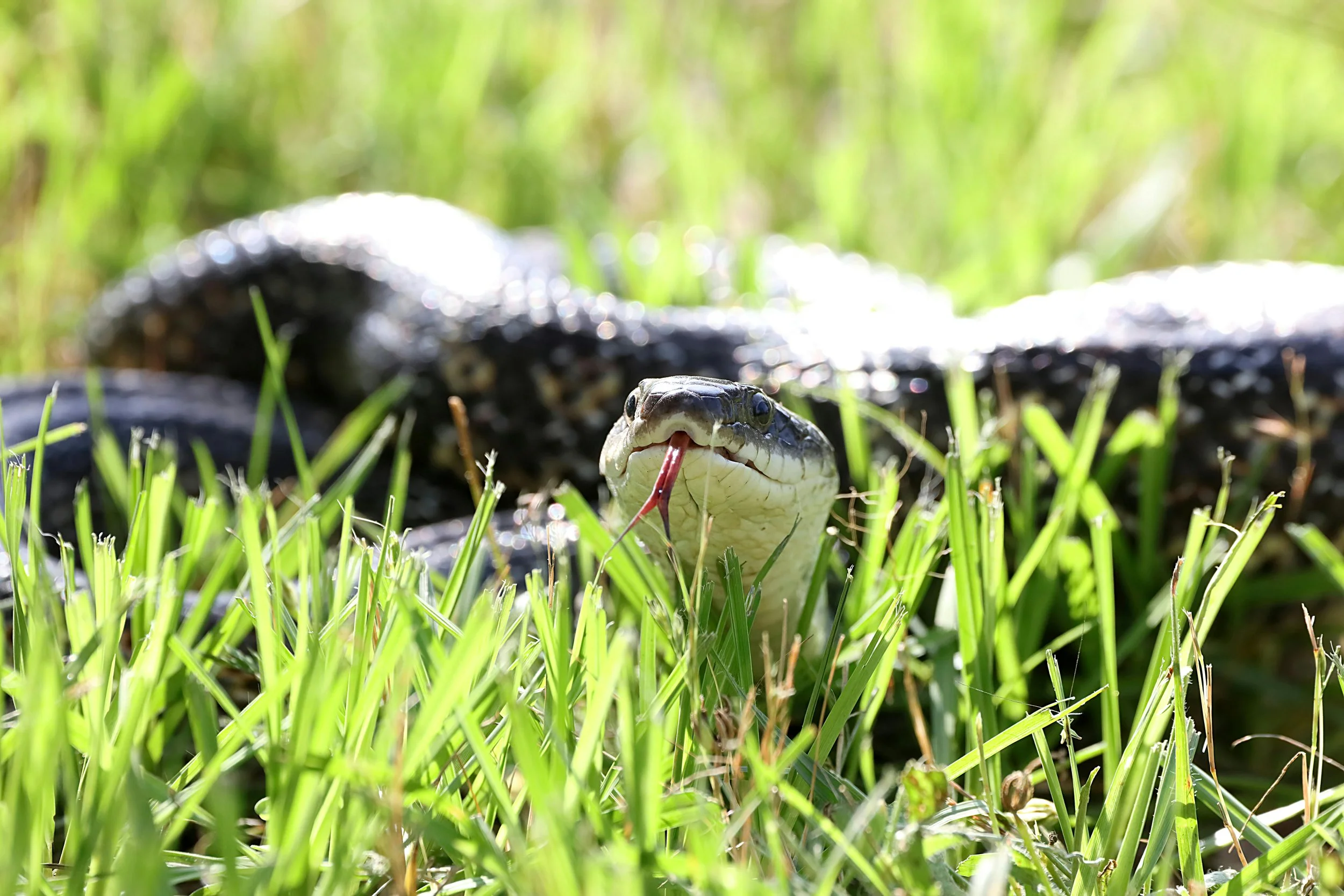
"Herps" is a shortened term for herpetofauna or herptiles, which collectively refers to all amphibians (like frogs, toads, and salamanders) and reptiles (like lizards, snakes, and turtles). While turtles are the most common herps we treat, Missouri is home to a wide variety of reptiles and amphibians.
We do not treat domestic herps or venomous wildlife.
If you find a herp caught on a sticky trap or in garden netting:
Call our main line as soon as possible to arrange intake. Do not apply any substances to try to remove the animal yourself. With a sticky trap, if you are able to safely do so, you can apply cornstarch to the remaining exposed sticky portions so that the animal does not become stuck to the trap in additional places. Otherwise, keep the animal in a safe, dark, calm space until you are able to bring it to us for removal.
If you see a snake (or any herp) in the road or on a busy sidewalk:
Roadways and sidewalks can often feel like a good place for basking for our cold-blooded herp friends. Approach carefully and giving as much distance as possible, encourage the animal to continue across the road in the direction it is heading or facing and observe the animal for a short while to ensure it does not re-enter the road. A stick can aid in getting the animal off the road. Human safety while assisting wildlife in crossing the road is always paramount.
If you have a snake that has ingested a foreign object:
Call our main line as soon as possible to arrange intake. We often see snakes that have accidentally swallowed items (golf balls, an antique doorknob, or ceramic eggs) used to encourage chickens to lay. The snake will be unable to digest this item and will need surgical intervention.
Amphibian species are often particularly sensitive:
Please handle all wildlife carefully and as little as possible. Lotions or other chemicals from your hands can be absorbed through their sensitive bodies and amphibians, especially, should not be handled unless absolutely necessary. When possible, use gloves or some other clean barrier to move or contain them.
Contact the Wildlife Rescue Center at (636) 394-1880 for instruction on any situation not covered by the preceding information.